
Tile and grout cleaning with a defined scope
We specify the areas being cleaned—cook line, dish, walk-in approach, entries, and storage—so expectations are clear and results are repeatable from visit to visit.
Serving Fremont, California & surrounding areas
Mon–Fri 8am–6pm Sat 9am–2pm
Kitchen floor cleaning · Fremont
Get greasy, slippery kitchen floors back to a clean, grippy surface with a scheduled cleaning plan that fits service hours and inspection expectations across Fremont.
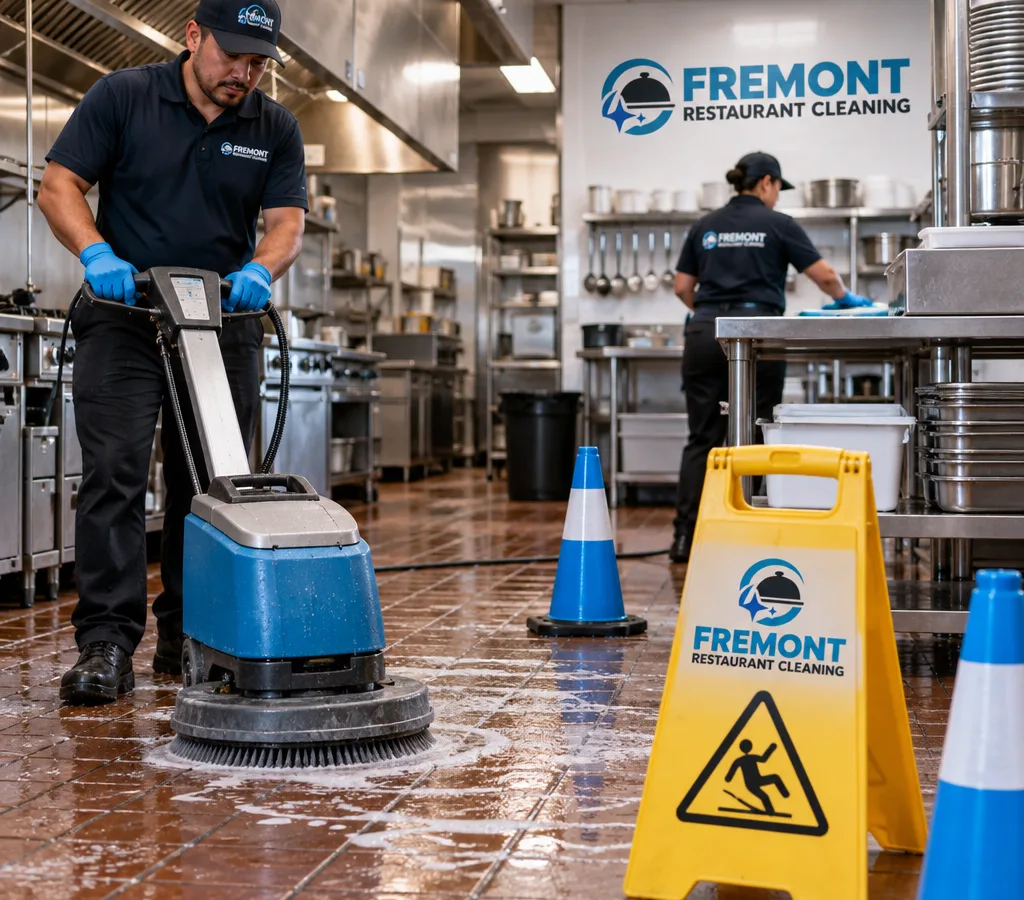
Safer back-of-house surfaces
Commercial Kitchen Floor Cleaning is about one thing: removing embedded grease and soil that mopping leaves behind, especially along cook lines, dish stations, floor drains, corners, and transitions into walk-ins. In restaurant kitchens, the real risk is the film you cannot see until the floor turns slick under foot traffic.
At Fremont Restaurant Cleaning, we focus on restaurant tile cleaning that improves traction and keeps grout lines from turning into grease traps. We work around prep and service windows, and we use a process designed for commercial kitchens: alkaline degreasers where they belong, agitation that reaches into textured tile, and controlled rinsing and recovery so you are not left with standing water.
If you are looking for a broader cleaning partner for front and back of house, our team also supports professional restaurant cleaning as part of regular maintenance for Fremont operators.
Embedded grease removal
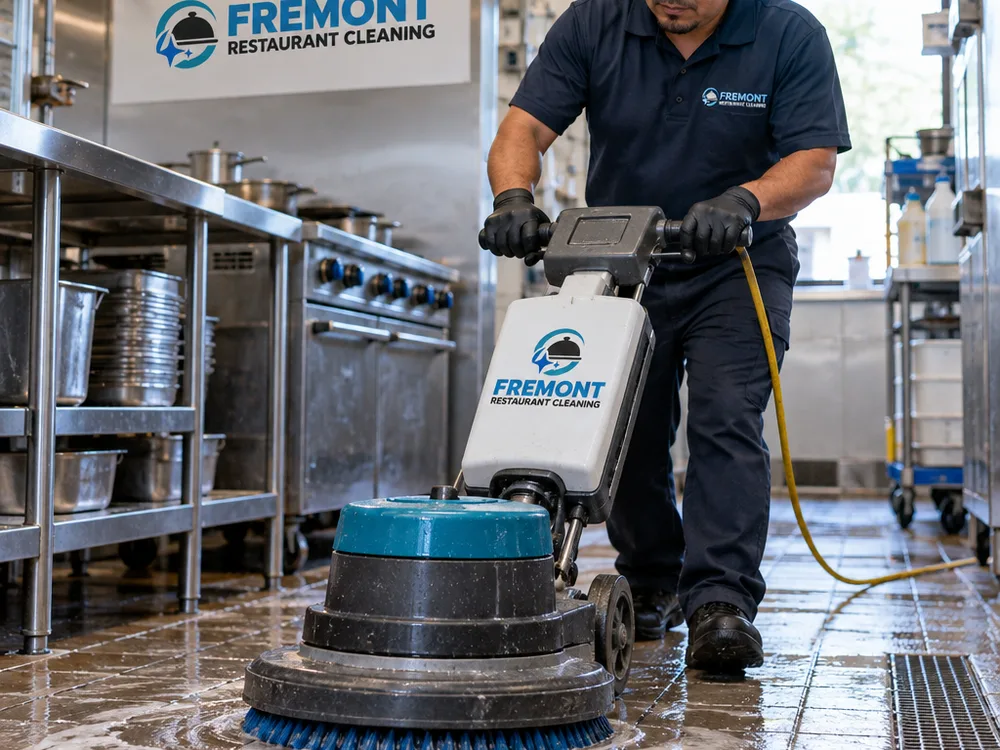
Kitchen floor degreasing is different from a standard scrub because grease bonds to tile texture and settles into grout pores. We treat it like a removal job, not a wipe-down.
What we typically do on restaurant floors:
Restaurant floor degreasing can also expose issues that cause recurring slickness, like worn sealers, low spots that hold water, or grout that has softened and crumbles. If we see a condition that affects cleaning results, we flag it in the scope so you can address it proactively.
Service standards
We specify the areas being cleaned—cook line, dish, walk-in approach, entries, and storage—so expectations are clear and results are repeatable from visit to visit.
Grout lines hold grease and soil and are often where floors stay slippery. We scrub grout intentionally rather than treating it as an afterthought.
We spend time where slips start: corners, around floor drains, along base edges, and the routes staff use most during rush periods.
Most commercial floor cleaning in Fremont is scheduled around off-hours, deliveries, and close-down routines so your team is not working around wet floors.
Recovering slurry matters. If dirty water is left behind, residue can dry on the surface and reduce traction.
After the reset, we can help you set a practical cadence that keeps grease buildup from returning to the same problem spots.
Fremont floor-care focus
Fremont restaurant kitchens see a mix of oily soil from cook lines, protein and starch residue from prep zones, and detergent carryover from dish areas. That combination is why floors often look “clean” but still feel slick.
Common trouble spots include the leading edge of the cook line, dish-machine exits, walk-in thresholds, wall bases, door swings, and floor drains where repeated mopping can leave residue behind.
We regularly support operators near the Fremont Hub area and along busy corridors such as Mowry Avenue and Stevenson Boulevard. The goal is a floor that cleans consistently even when back-of-house staffing and closing routines change.
We identify grease concentration zones, confirm access to water and drainage, and set up wet-floor controls so staff and vendors can move safely if they are on-site.
We remove loose soil first, then pre-treat heavy grease areas and grout lines so the chemistry can work before agitation starts.
We scrub with equipment and brushes matched to tile type and texture, then detail edges and tight zones by hand where machines cannot reach.
We rinse and recover slurry so residue does not dry back onto the tile, then do a final pass for corners, drain rings, and transition strips.
We confirm the floor is left clean and stable, then note any ongoing issues that affect results, such as worn grout, failed caulk lines, or areas that hold water.
Planning your service
Commercial Kitchen Floor Cleaning in Fremont typically ranges from about $250 to $900+ per visit, depending on kitchen size and how much degreasing and grout work is needed. A smaller back-of-house tile area with light buildup often falls on the lower end, while heavy restaurant floor degreasing around cook lines and dish areas, plus detailed grout cleaning, costs more.
Price is mainly driven by square footage, grease thickness, tile texture, access—including moving mats or light equipment—after-close hours, and whether multiple zones need separate containment. Exact pricing is confirmed after a walkthrough and condition check.
“We had tile that always felt slick near the line even after nightly mopping. After the deep degrease and grout scrub, the floor looked lighter and felt noticeably less slippery during service.”
“The difference was the edges and drains. They actually pulled the buildup out instead of spreading it around. Our close-down crew said it was easier to keep up the next week.”
Common questions
Most restaurant floor cleaning services take 2 to 5 hours for an average back-of-house area, depending on grease level and how much grout detail is required. Heavier restaurant floor degreasing near fryers and grills takes longer because the chemistry needs dwell time and the grout usually needs extra agitation. We confirm timing after a walkthrough so you can plan staffing and dry time.
Yes, quarry tile and textured kitchen tile can be cleaned safely when the chemistry and brushes are matched to the surface. The key is avoiding overly aggressive pads that can scar the high points while still scrubbing deep enough to remove grease from the texture and grout. We typically spot test first, then adjust agitation and rinse so the floor is clean and stable.
Restaurant grout cleaning can significantly lighten grout when the discoloration is grease and embedded soil, but it cannot change grout that is permanently stained, deteriorated, or covered by failing coatings. After cleaning, you will get a clearer picture of whether you are dealing with soil buildup versus grout wear or staining that may need repair.
Yes, after-close scheduling is common for commercial floor cleaning in Fremont because it reduces slip risk and keeps equipment and traffic out of the work zone. Tell us your typical close-down window and any delivery times, and we will propose a schedule that fits your operation.
To keep the visit efficient, have loose items cleared off the floor, roll up removable mats, and let us know what can be moved versus what stays in place. If you have a specific problem area, such as the route from the cook line to the walk-in, flag it so we can prioritize the highest-risk zones first.
Most kitchens benefit from a periodic deep clean on a schedule that matches grease output and traffic, often monthly or quarterly. A higher-volume kitchen with fryers and heavy sauté work usually needs deep restaurant floor degreasing more frequently than a light-prep operation. We can recommend a cadence after we see how quickly buildup returns in your specific areas.
Plan your floor cleaning
Share your kitchen layout, tile type, and the areas that stay slick, and Fremont Restaurant Cleaning will provide a written plan for degreasing, tile and grout cleaning, and a maintenance cadence that fits your operating hours.